
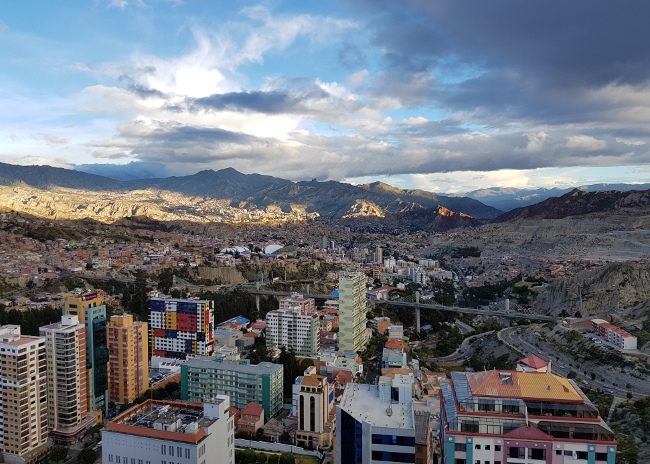
Every morning for 2 weeks, I stared sleepily out the window at the incredible view of La Paz, thinking to myself ‘wow, this city is incredible.’
And every night for 2 weeks I gazed at my bedroom ceiling, calculating how many days (and sometimes hours) until our escape.
I don’t think I’ve ever been to a place that generates such a mixture of feelings; it’s beautiful, ugly, fascinating and depressing in equal measure.
Bear with me as I attempt the impossible and try to put this crazy and complex city into words.

The highest capital city in the world
La Paz is the world’s highest capital city, sitting at an average of 3650 meters above sea level. Confusingly, the airport is actually in El Alto, which sits on the high plain overlooking La Paz. Technically it’s another city, but they kind of blur into one.
El Alto itself is the highest international airport in the world, at the dizzying height of 4065 meters. On arrival, you’re greeted by a worryingly large poster warning you of the symptoms of altitude sickness and a complimentary headache.
Even though Laura and I had been at 1000 meters in Argentina for a couple of weeks, the extra 3000 meters hit us hard, and we soon needed the magic Bolivian altitude sickness pills, Sorojchi. I’m pretty sure it’s just expensive aspirin, but it helps anyway.
The problem, however, doesn’t stop with the altitude. The streets of La Paz are so unrelentingly steep, you get an unwanted insight into what your mobility and lungs will feel like in 30 years time (not so good, apparently.)
On the plus side, taking a leaf out of the local’s book and drinking coca tea soon puts a spring in your step…especially when consumed in large quantities.
The views
What makes La Paz truly remarkable is the way the city looks from a distance. And I don’t mean through the window as you finally leave, though that’s kind of nice too.
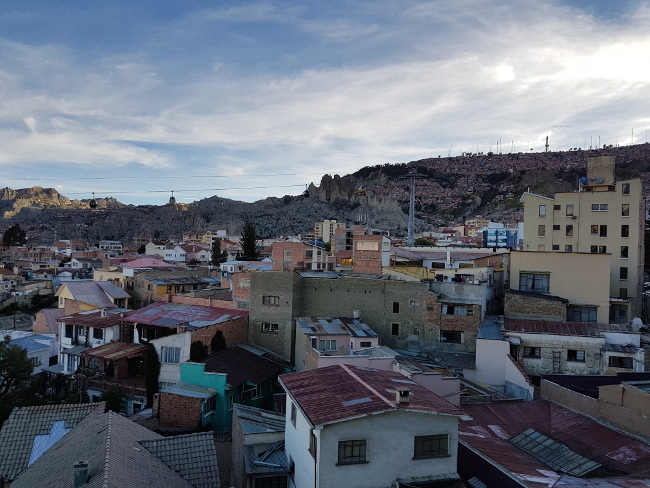
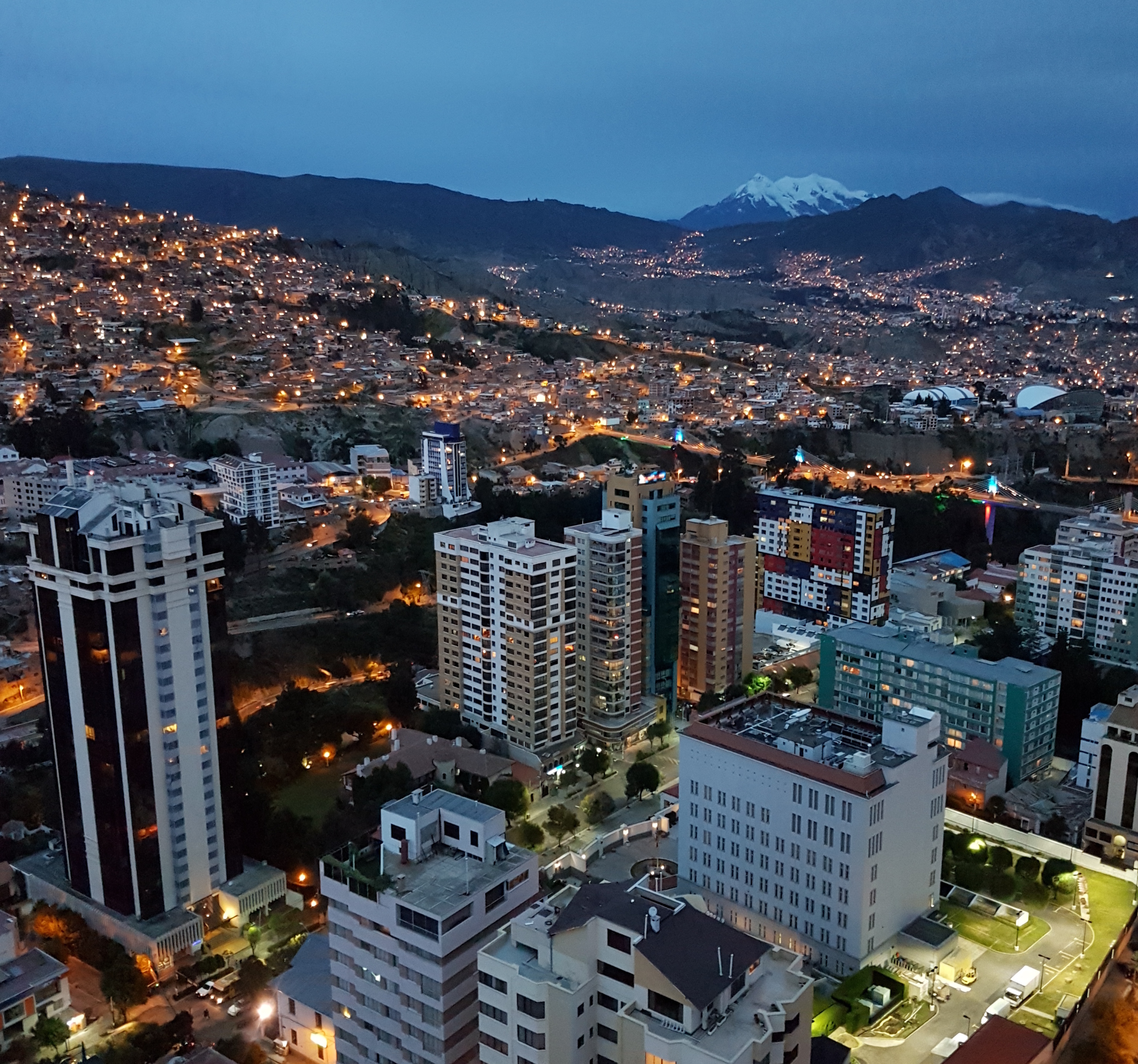
The combination of tall buildings, red brick houses (many of the poorer people don’t finish their house because a facade automatically incurs higher taxes!), mountain backdrop, and unusual clay and sandstone rock formations is undeniably spellbinding.
Here are a few photos to show you what I mean.
At street level
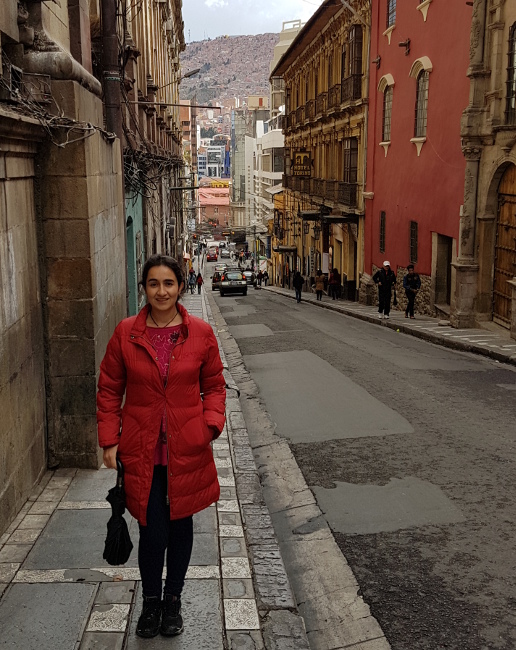
While the city appears enchanting when you take a step back to look at it, at street level it’s a different story altogether.
Once you walk out of your front door, you’ll find yourself weaving your way through the overcrowded streets, avoiding massive holes in the badly maintained pavements, whilst trying your best not to get run over or accidentally walk into the tiny people, who sometimes don’t enter your field of vision until it’s too late.
The city is busy, noisy and full of surprises along the full spectrum from amazing to awful.
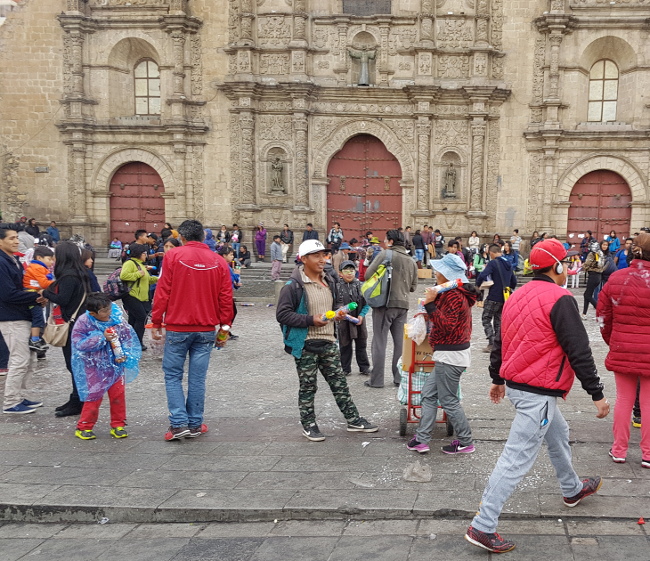
Sometimes the surprise is a colorful explosion of dance, laughter and fun. We were there during carnival week, so the city was alive with the traditions of mass foam fights, deafening fire crackers 24 hours a day, making merry and dancing in beautiful traditional outfits.

But sadly, the surprise is often a reminder of the fact that you’re in South America’s poorest country. There are too many unfairly elderly women and young children begging. Too many rundown parts of what could and should be a proud city center.
One evening, I noticed young children coming away from the side door of a restaurant with plastic bags. A boy, no older than 10, sat in front of me on the pavement, opened his bag and started fishing around inside with his dirty hands until he found a chicken leg.
Evidently, it was a bag of leftovers lumped together and given out by the restaurant. I bought him a cake, thinking it would be nice to have his own desert that didn’t have bits of various other meals stuck to it.
Another day, we bought a mini pizza for a young girl we found staring longingly at food displayed in a glass cabinet on the street. Like the boy, she accepted it silently, but managed a brief smile on her otherwise miserable expression.
Having traveled extensively through Latin America, I’m kind of used to seeing poverty. But the quantity of such young children and elderly women begging in La Paz is heartbreaking.
If you take a moment to look deeply into the eyes of the people behind the traditional dress and funny-looking bowler hats, that are so often the subject of tourist’s photos when they rave about how great Bolivia is, you’ll find a strange mixture of pride and sadness.
Every day, I found myself wishing I could do more to help than constantly dropping a coin or two into the withered hands of 70 year old women and surprising kids with cakes.


On a more positive note…
Despite the poverty, La Paz does of course have some absolute gems worth visiting, if you can actually find them in this vast urban labyrinth.
Here are a couple that we loved.
Valle de la Luna (moon valley)
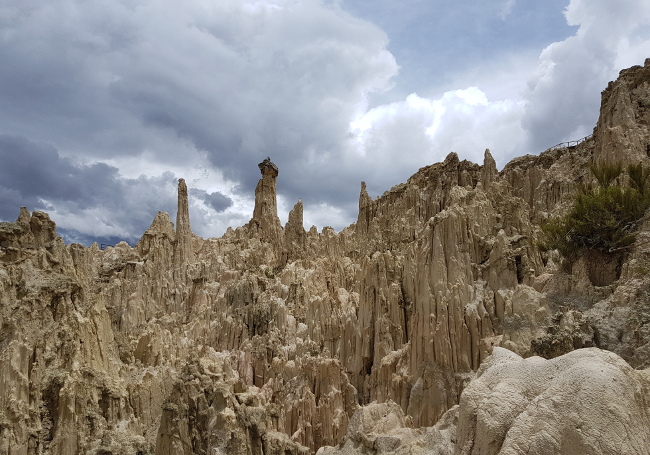
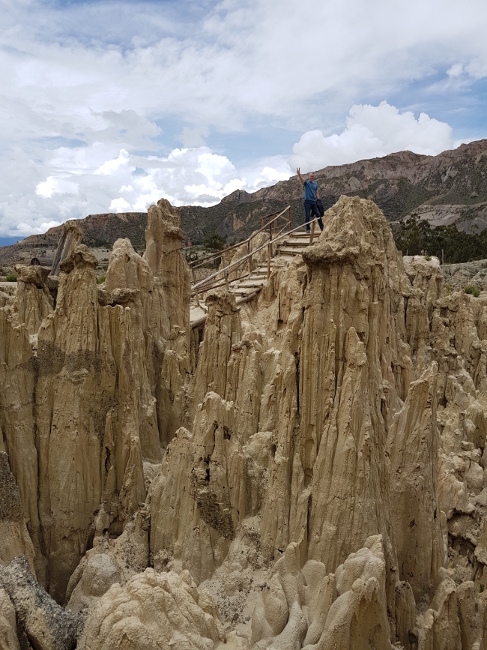
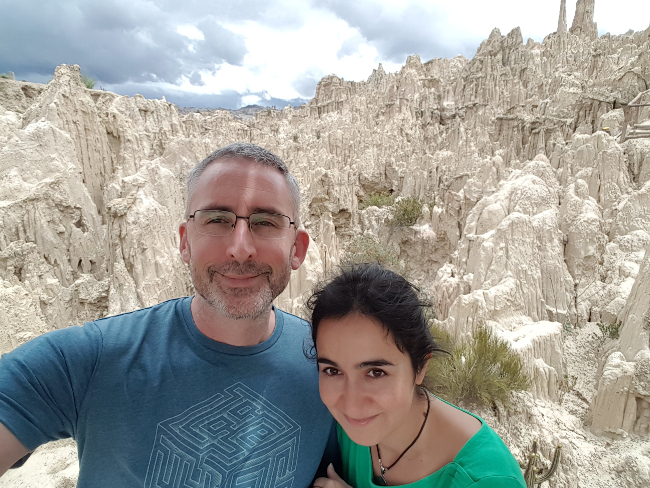
Bolivia is known among travelers as being home to some of the most unique landscapes in South America, and the Valle de la Luna certainly didn’t disappoint.
Despite the name, it’s not actually a valley (as I said, La Paz is a complicated place!). It’s in fact a series of canyons and spires created by the erosion of clay and sandstone by the powerful wind and rain that regularly smash into La Paz.
The surreal, moon-like landscape is a simply magical place to visit.
The witches market
Visiting the witches market was one of the highlights of my time in Bolivia, and one which set Laura and I down a dark path of learning about some of Bolivia’s more shocking customs. More on that in a bit…
Despite being called the witches market, it’s not really a market. It’s an old neigborhood full of shops selling gifts, crafts, artesanias and anything else the shopkeepers think they can convince tourists to buy.
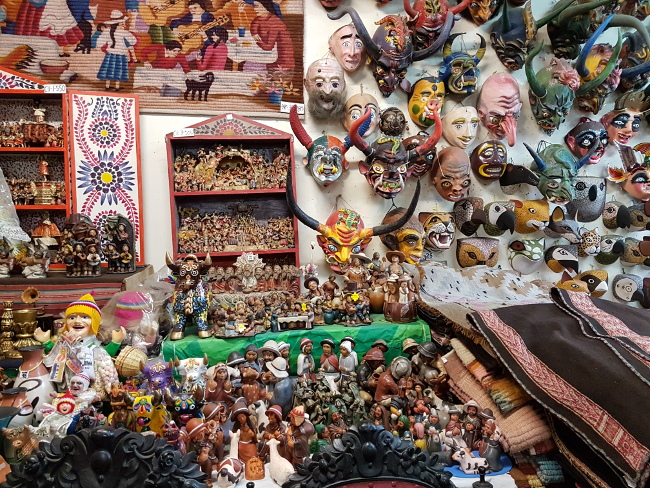
They take some finding, but there are indeed shops selling, er, stuff for witch doctors. I’m still not sure what the technical word is, so we’ll just call it stuff for now.
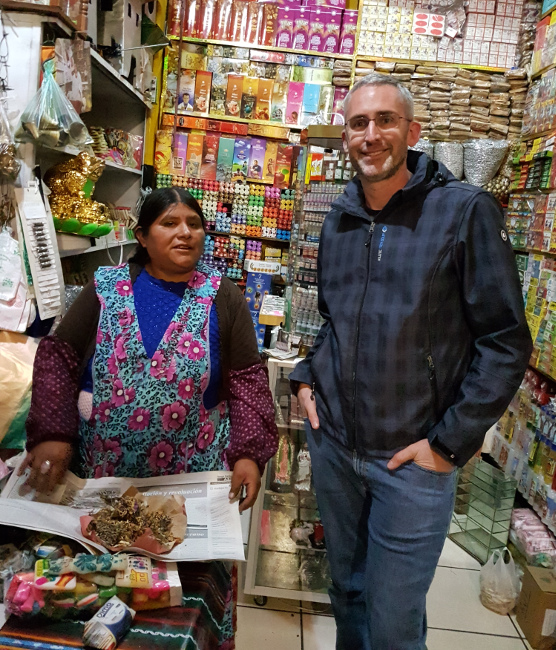
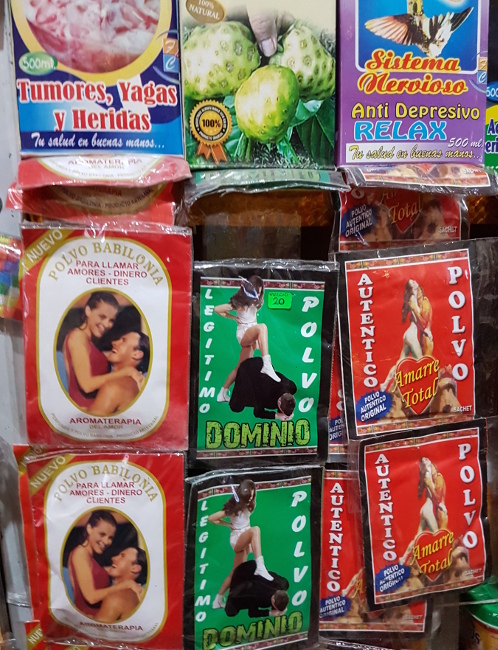
The shops in the witches markets are unbelievable places, and the culture surrounding them equally fascinating. It seems there’s a potion, talisman, spell, herb and who-knows-what for everything.
There are cures for everything from acne to cancer, and even boxed herbs that give women power over their men. Wanting something a little more personalised though, I asked the witch doctor, known locally as a Yatiri, what she could do for my health.
For 50 Bolivianos (6 pounds), she offered to concoct a bath mix which would cleanse and heal me. We haggled a bit (as is always the way in Bolivia) and for 30 she put together a football-sized bag of flowers, cactus spines and herbs.
I’d love to say it worked, but the idea of putting huge cactus spines in my bath didn’t appeal, and I somewhat guilty and unceremoniously threw the bag in the bin.
Still, it was an interesting insight into an important part of Bolivian culture.
I just hope she didn’t see me.
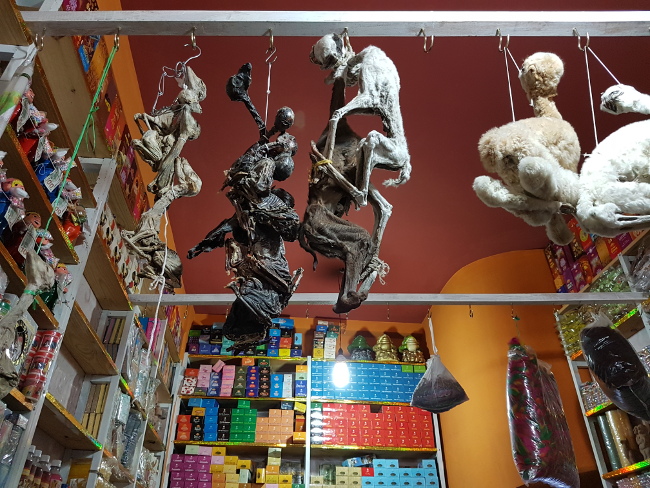
When you build a house you…
…bury a Llama fetus in the foundations. I did say we’d be going down a dark path, right?
Bolivians have many fascinating traditions, some of which might seem a bit unusual to foreigners. Belief in Pacha Mama, Madre Tierra or Mother Earth is strong here, as is making offerings and sacrifices to her.
So when a new house is built, it’s not uncommon for people to acquire a Llama fetus, and bury it in the foundations as a sacred offering to Pacha Mama.
Seeing them hanging in the witches shops for the first time is a particularly special moment…
Safety
If I was a criminal, I wouldn’t feel safe in La Paz. I’d been warned that La Paz can be a bit unsafe, but a chat with a taxi driver one day soon explained why we didn’t see any trouble.
While driving through some of the poorer neighborhoods of El Alto one day, I asked why there were so many scarecrows hanging from lampposts. I was expecting him to tell me they were memorials for traffic accidents, or some other logical explanation.
He explained that they are in fact to warn criminals that lynching takes place in that neighborhood. Bolivians, it seems, don’t have much faith in the police or the justice system, feeling that criminals easily escape by paying bribes.
So the locals take justice into their own hands and hang them, burn them alive, or both. The taxi driver said he’d seen someone tied to a football post and burned alive, and that even a corrupt mayor had suffered a similar fate in 2004.
Finding it hard to believe, I did a bit of research and found an article in the guardian online saying that lynching is – unlike some former criminals – very much alive in Bolivia.

When you build a bridge, you…
…bury a drunk man in the foundations as a human sacrifice to Pacha Mama.
Our taxi driver was also the source of this particularly disturbing legend. Apparently, when building large constructions such as bridges, some builders still believe in the ancient custom of human sacrifices to bless the site. It’s said that they lure drunks with free drinks and food, then throw them into the cement.
I again did some research into this one, but couldn’t find anything to verify it, other than other bloggers who’ve heard the same rumours.
Having said that, I also couldn’t help notice the complete lack of drunks on the streets of La Paz…
2 weeks too long
People did warn us that 2 weeks was a long time to spend in La Paz. And although I’m glad we went, I think 2 days would have been a more reasonable time to spend there.
On the other hand, it was a humbling experience and we got an interesting insight into the reality of life here, even if it was a bit painful at times.
Yes, Bolivia and La Paz are amazing places to visit. But no, they aren’t easy to visit – neither physically nor emotionally.
 Jellyfish Rock
This was my favourite blog so far. There was some weird cultural stuff going on there and the moon valley looked trippy!
LikeLike
Thanks! Great to hear you liked it:-) it’s definitely a pretty crazy place to visit:-)
LikeLike