
 Call me uneducated, but my prior knowledge of Argentina wasn’t much more than this: Buenos Aires is the capital; they dance Tango; Diego Maradona did that hand of God thing; there was/is an island dispute between our countries; and they have good steak and wine.
Having lived for 3 months now in Salta, a small city nestled in the mountains 1152 meters above sea level, not far from the borders of Chile and Bolivia, my preconceptions have been both confirmed and shattered in equal measure.
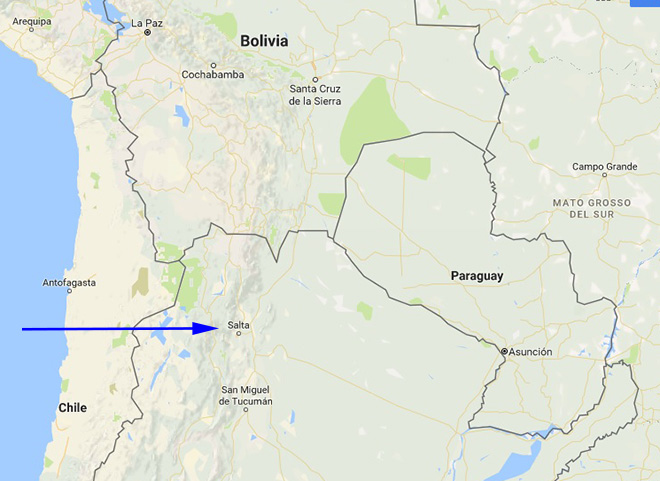
I can’t speak for the rest of Argentina – it’s a massive country after all, but I’ve explored a lot of the North West. So here are a few updated thoughts that spring to mind when I think of the place I’ve most recently called home.
After I’ve shared some of my musings, I’ll talk in a little more detail about some of the incredible places the region has to offer.
- There’s relatively little Tango in the north. With guitars, panpipes, drums and unusual percussion instruments made from animal parts, it’s all about Folklorica – and of course, the cheerful beats of Cumbia.
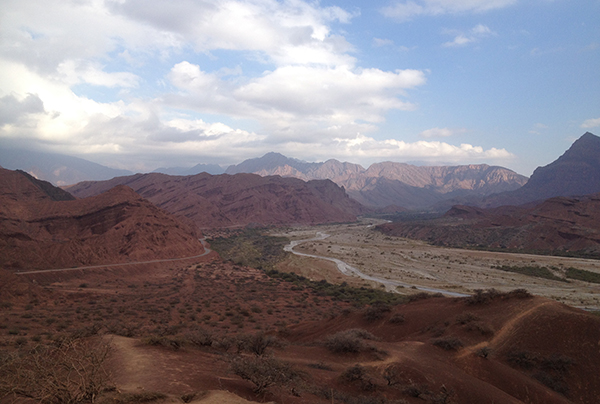
- The landscape is wild, dramatic and staggeringly beautiful. If you like mountains, geology and ancient civilizations, you really should visit.
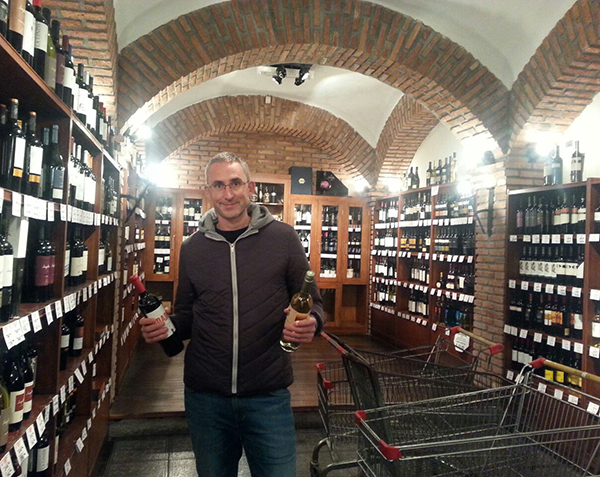
- The steak and red wine are awesome. At least I got that one right. I also got a small belly thanks to being served half a cow whenever I went out for dinner.
- The island dispute isn’t just a part of history here. It’s an open wound that’s regularly referred to in patriotic events (of which there are many), conversations with guys who’ve had a couple of beers, and even a TV advert for a soft drink. Nobody was ever rude to me personally about the topic, but it’s definitely not over yet.
- Despite being a little unsure how to respond when you tell people you’re English, often resulting in a moment’s awkward silence which I learned to fill with a silly joke, the Argentinians I met were all very friendly, cheerful, laid-back and excellent hosts – especially at their epic barbecues.
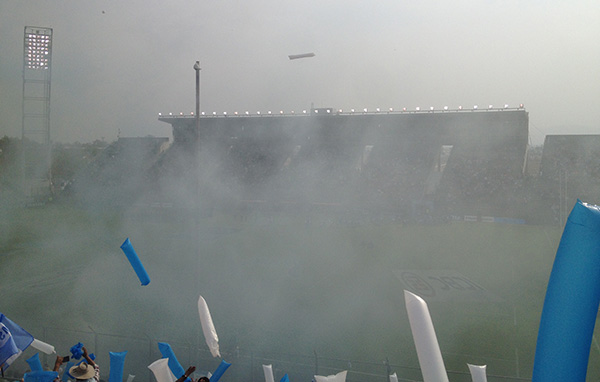
- Many Argentinians are extremely passionate about football and/or rugby. I had the great pleasure of watching them beat South African for only the second time in history in the local stadium, and loved how the crowd were so animated and vocal in support of their team.
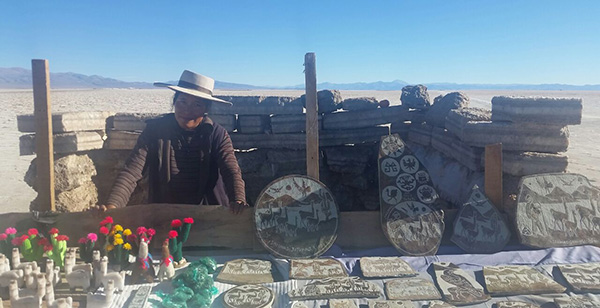
- We hear all the time how Buenos Aires is a modern and cosmopolitan city with the most European feel of any South American city. The north has none of that though, with its distinctly old colonial and/or indigenous feel in many places. It adds a wonderful richness to the towns seeing descendants of pre-hispanic cultures selling their colorful artesanias on the street, and in places you’d just never expect to find a shop.
- Outside of the urban centers, it’s not uncommon to see houses made from mud bricks, clay and wood with metal roofs held in place by large rocks. As is the case in all South America countries, millions of Argentinians live in poverty – not helped by food, clothes, imported goods and utility bill prices which never ceased to shock me.

- People often don’t have any small change. So when they owe you 1 or 2 pesos in a shop, they just give you random things. Normally it’s sweets, but in the supermarket yesterday I was given one peso’s worth of teabags – which was one teabag. And not long ago in a pharmacy I received 2 peso’s worth of plasters. Which was 2 plasters.
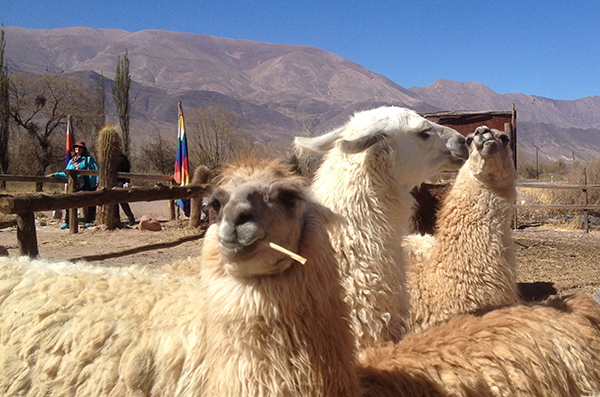
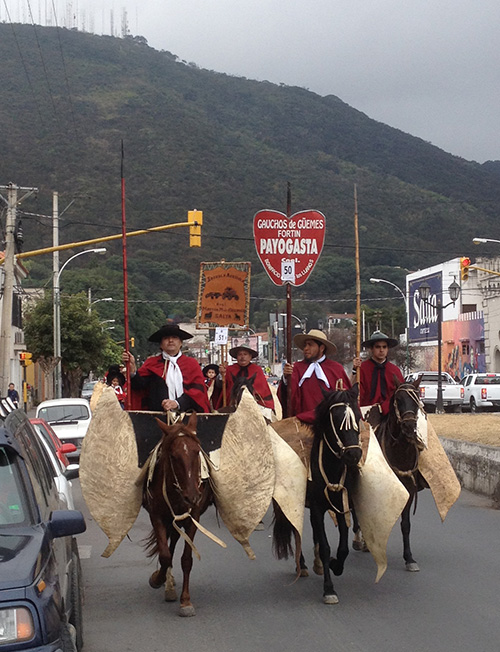
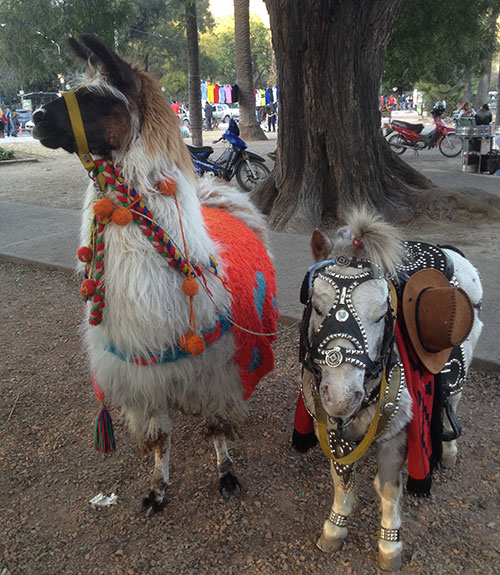
- If you like horses, llamas and dogs, this is the area to visit. You’ll find more on your journeys than you could ever hope for. People even knit little jumpers for the stray dogs, of which there are vast quantities. Most impressive of all though are the traditionally-dressed Gauchos, with the giant leather protective ‘wings’ on the sides of their horses.
It’s really safe here. Obviously you need to take the usual precautions, but in 3 months I never once felt I was in any danger, other than putting on weight.
You can walk around the towns and villages late at night, hire a car and drive where you want. Of all the areas I’ve visited in Latin America, this would be the one I’d most recommend to anyone with safety fears, but who wants a great insight into traditional South American culture and scenery.
Spell-binding places to visit
If you asked me where to visit in Northern Argentina, the fairest answer would probably be “everywhere”. I may be slightly biased, having a girlfriend who comes from this region, but I was regularly blown away by the beauty of the landscape.
Here are some of my favourites.
Salta
Salta was the city I called home for 3 months. It has a population of over 600,000, yet still looks like a town rather than a city.
Having said that, it definitely feels like a city when you try to navigate the pavements mid-morning or late afternoon.
I called it the “Salta dance” as the quantity of people, narrow pavements and laid-back Latino attitude towards anticipation mean you have to weave, flow and dance from A to B.
That aside, Salta has a striking beauty to it, especially in the center. They call it “Salta la Linda” (Salta the beautiful) due to its well-preserved colonial architecture, great weather, strong sense of identity, friendliness and the surrounding mountains which quietly promise adventure and exploration.
 It also has some fantastic food, with their famous empanadas taking first place. Kind of like our Cornish pasties but smaller, more delicate and I hate to admit it – much tastier.
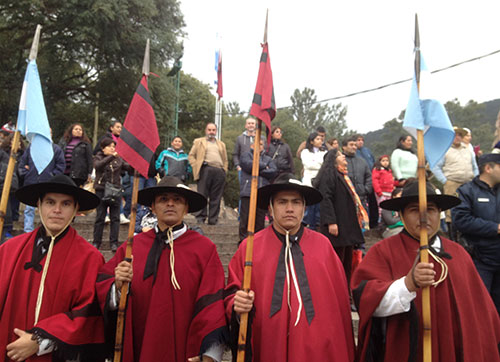
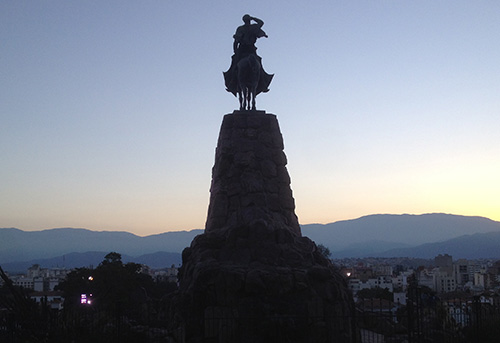
And if you ever want to get a feel for Latin patriotism, this is the place for it. I’ve never seen so many historical celebrations in such a short time span, often featuring General Guemes, who played a key role in the war of independence.
Perhaps most impressive of all though is the opportunity to see incredibly well-preserved Inca children that were found mummified in the icy mountain peaks. If you’re interested in the Incas, Salta has one or two remarkable treasures.
I loved my time in Salta, and will miss my life there, with the medialunas for breakfast, empanadas for lunch, steak for dinner, dulce de leche ice-cream – and accidental new obsession with food.
 Cafayate and the Calchaqui valleys
When I first arrived in Salta, I couldn’t understand why there were so many car hire companies. I soon learned that it’s because there are so many amazing road trips you can do.
You can literally drive off in any direction and be rewarded by incredible scenery and fascinating towns to explore, with my favorite of all being Cafayate.
It would probably be a 2 hour drive from salta, but it soon turns into 4 when you stop after every bend to take photos of the latest rock formations you’ve never seen before or pick up more entertaining hitch-hikers.
It’s one of those drives where you soon stop caring about arriving at your destination, such is the joy of the journey.
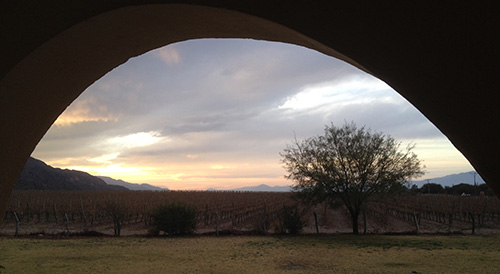
 When you do finally arrive in Cafayate, there’s a good choice of hotels and hostels, either in the quaint old town or in the middle of one of the countless vineyards. And top quality Argentinian wine at prices you just can’t refuse, with magical sunsets to peer through your glass at.
 Ruins of Quilmes
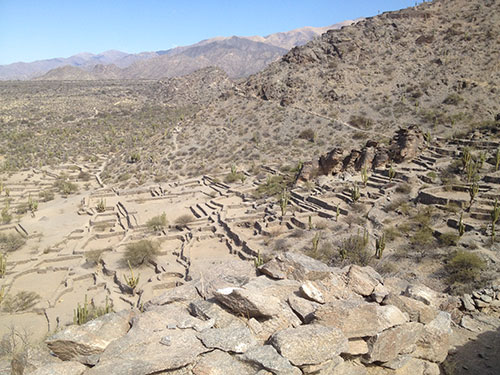
Right next to the town of Cafayate lies the impressive Ruins of Quilmes. It’s a great example of how much pre-Columbian history there is in Argentina, with the ruins dating back to 850AD.
I called it the Machu Piccho of Argentina, and I still can’t believe I hadn’t heard of it until someone casually told us it was worth a visit.
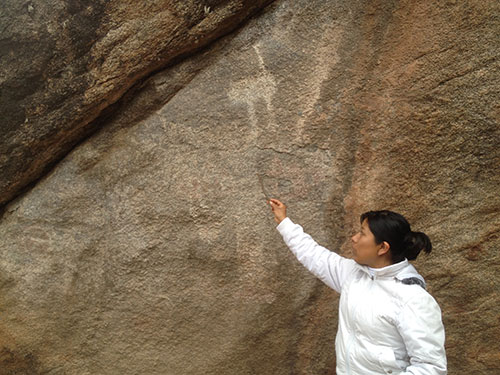
 And if 850AD still isn’t old enough, you can go even further back in time if your car can handle a 3km dirt track road into the middle of nowhere. There in San Isidro you’ll find cave paintings that the local guides tell you are some 10,000 years old.
 The Quebrada de Humahuaca

It’s hard to know where to start in describing the Quebrada de Humahuaca. As much as Cafayate was my favorite for personal reasons, the reality is the Quebrada is equally, if not more, impressive in many ways.
It’s a 155km long valley to the north of Salta and a UNESCO World Heritage–listed gorge. Again you can hire a car in Salta and then just drive the whole distance, stopping to take a million photos and visit all the wonderful indigenous villages and towns along the way. Here’s a bit about the main sites:
Pumamarca
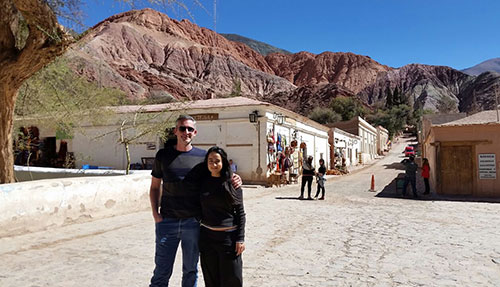
Pumamarca is a tourist favourite, and with good reason. It’s a tiny village set against the backdrop of the hill of 7 colours. Filled with mud brick houses and locals selling handicrafts, it’s great fun to wander around aimlessly, soaking up the other-worldly atmosphere.
 Tilcara
Next along is Tilcara, a larger town that Pumamarca and possibly the driest and dustiest place I’ve ever stayed. No matter what colour any object is – if it stays outside overnight, it turns brown.
Tilcara has a good range of places to stay and eat, and I think the ideal place to base yourself if you’re going to explore the Quebrada.
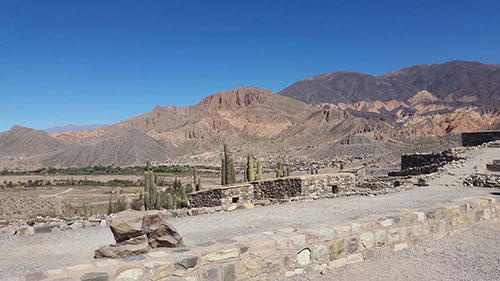
It also has fascinating ruins, which are well organised by some excellent tour guides. I don’t usually have the attention span or patience for mini tours, but the guide here was excellent.
It was great to find out more about the rich history of the Quebrada and the on-going battle between Argentinians who would rather erase the pre-independence past and those who value the rich history the region has.

 Humahuaca
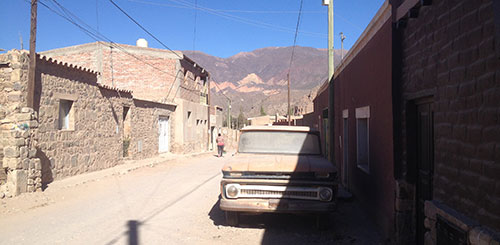
The final town along the Quebrada, Humahuaca is larger still, busier and full of tour guides at the entrance to the town offering to show you around. We decided to by-pass them (and were glad we did) and check out the bustling market and town center ourselves.
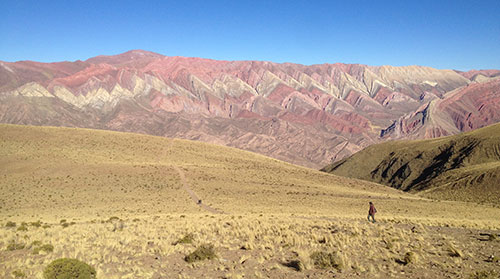
It was here that the hire car’s wheel trims were ruthlessly shredded by driving one hour up a mountain along a 30km dirt/rock road to reach the hill of 14 colours.
It was well worth it though – the view, albeit freezing cold, is simply breathtaking. It was a fitting final stop on this incredible journey through the Quebrada.
 Salinas Grandes
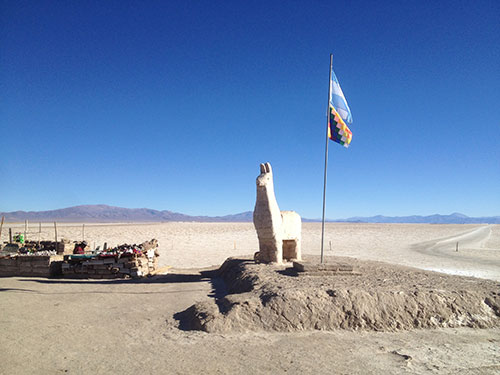
Many travelers to South America picture Bolivia as the home of salt flats, but both Chile and Argentina also have them. And even though they aren’t as massive as Bolivia’s, they are still a lot of fun to visit.
Getting to the Salinas Grandes isn’t the easiest drive, and one that will test your ability to handle altitude sickness or chew bitter coca leaves like the locals to off-set the effects. On route, you climb to over 4160 meters before descending to the salt flat, which still sits 3350 meters above sea level.
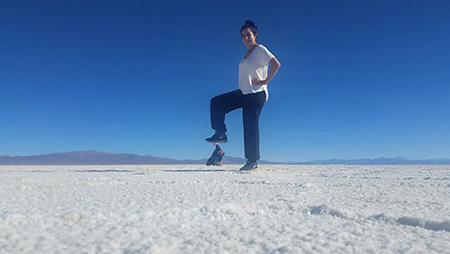
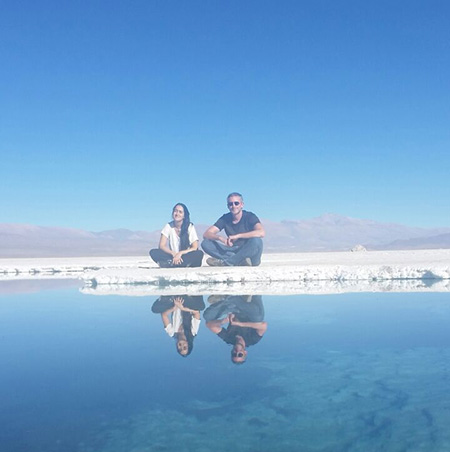
Again, you can hire a tour guide at the entrance to direct your car through the crumbling flats and stop off at the salt pools. And perhaps best of all, they know all the tricks to take cool photos.
 Buenos Aires
After 3 months in the north, my time in Latin America had to come to an end – for now. With the call of my annual CT scan and my niece’s second birthday, it was time to head home to England for a short while.
I stopped by Buenos Aires on the way for 2 days, where it rained solidly for 2 days. Having hardly seen any rain in Salta for 3 months, it was an ironic bridge back to the UK.
I won’t attempt to describe this wonderful city here – and it truly is wonderful – as I wanted the article to be about the north.
All I will say though is that the north and the capital could be in two different countries and it would make more sense. Never before have I felt such a vast difference between a capital and a province.
And the variety it demonstrates only adds to my firm feeling that this is now one of my favorite countries in South America.
I’ll be back, Argentina.
 Jellyfish Rock
Great reading Malcs!- keep it up – hope you are well :-)))
LikeLike
Hey Simon!
Great to hear from you:-) thanks for the comment – it’s nice to know you enjoyed the article.
Regards
Malcolm
LikeLike
Malcom, I enjoyed reading your article very much. I like the way you write. It is interesting to know your impressions about the region where I live.
LikeLike
Hi Graciela
Thanks for your comment and compliment – both are much appreciated! And it’s great to know you found the article interesting – I hope it was accurate too:-)
Regards
Malcolm
LikeLike
Hi Malcolm!!!
Is very difficult write in English for me, but I’ll trying to do it.
It is very awesome all that you write of the north of Argentina and only you were 3 month! Very, very nice!
Is a lucky that you finished the text saying that you come back, because there are a lot of places that visit and lot of wine that prove, and now there is a bar with craft beer (Cerveza Artesanal, je, no se como se dice artesanal y eso que convivo con artesanas y diseñadoras)
Well Malcolm, is very beautiful what you wrote of Salta and I agree with you in all! jejeje
Abrazo gigante Malcolm, nos vemos pronto!
LikeLike
Hi Catriel
Thanks for your comment, and sorry I didn’t reply until 2 month later! I haven’t even logged on to the site during this time, but I’m back now:-) and you’re English was very good!
Me alegro mucho de que te haya gustado el articulo – es bueno saber que alguien de alli esta de acuerdo con mis palabras. Espero veros de nuveo en algun moment este anyo!
Un abrazo
Malcolm
LikeLike